How to Use the Flash USDT Method on ChainIDE Effectively in 2026
Flash USDT is a method that allows users to create or simulate USDT (Tether) tokens using smart contracts on Ethereum-compatible blockchains. This technique involves deploying a custom ERC20 token contract that mimics USDT's functionality, often for educational, testing, or development purposes. The process is streamlined using ChainIDE, an online integrated development environment designed for blockchain developers, and MetaMask, a popular browser wallet extension facilitating secure blockchain interactions.
Understanding the Flash USDT Method
The Flash USDT method leverages smart contracts to create USDT-like tokens quickly and efficiently in a controlled environment. It is important to note that this method does not generate real USDT tokens backed by Tether Limited but rather creates token instances on test networks or private chains for experimentation. The core idea is to understand ERC20 token mechanics, contract deployment, and wallet interaction, which are crucial skills for developers and traders working with DeFi and Ethereum-based assets.
Setting Up ChainIDE for Flash USDT Development
ChainIDE (https://chainide.com/) is the primary platform used to develop and test the Flash USDT method. It offers an online cloud-based environment where developers can write, compile, deploy, and debug smart contracts without local setup complexities. To get started:
- Register or log in at ChainIDE.
- Create a new Solidity project using the ERC20 token template.
- Import or write the smart contract code that defines the Flash USDT token, typically adhering to the ERC20 standard.
- Compile the contract and prepare for deployment.
This environment supports interaction with Ethereum test networks, making it ideal for safe experimentation.
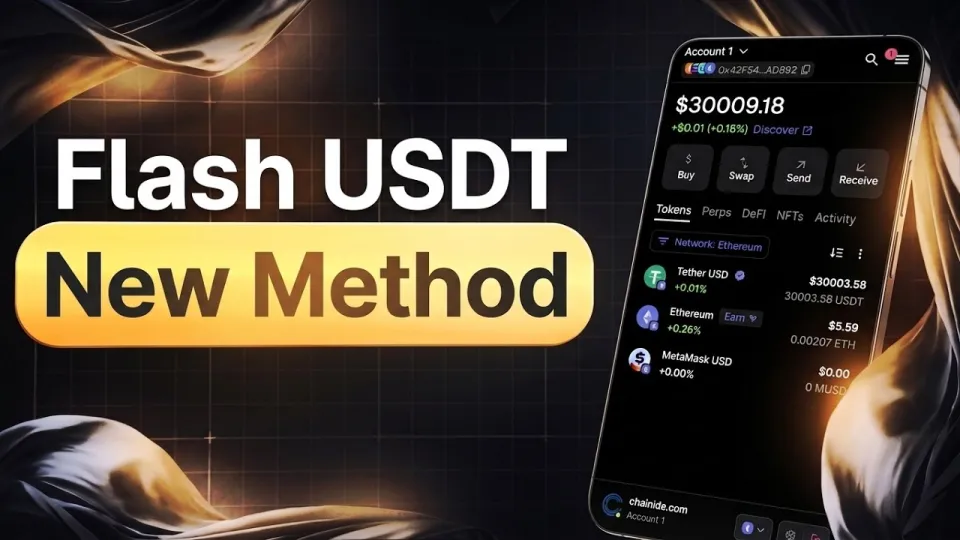
Video: I Found a NEW Flash USDT Method on ChainIDE…
Deploying and Interacting with Flash USDT Using MetaMask
MetaMask is essential for managing wallet addresses and signing transactions securely. After setting up your contract on ChainIDE, connect your MetaMask wallet to the same Ethereum network (mainnet or testnet) configured in ChainIDE. Steps include:
- Open MetaMask and select the appropriate Ethereum network.
- Connect MetaMask to ChainIDE’s environment.
- Deploy the Flash USDT smart contract from ChainIDE, confirming transactions via MetaMask.
- After deployment, use MetaMask to interact with the contract by sending tokens, checking balances, or calling contract functions.
This process simulates real-world token creation and management, giving users hands-on experience.
Key Components of the Flash USDT ERC20 Token Structure
The Flash USDT token is built upon the ERC20 standard, which defines a set of functions and events for fungible tokens on Ethereum. Important aspects include:
- Total Supply: Defines the maximum number of tokens created.
- Balance Mapping: Tracks each wallet’s token holdings.
- Transfer Function: Allows tokens to be sent between wallets.
- Approve and TransferFrom: Enables allowance and delegated transfer mechanisms.
Understanding these components is critical for working with any ERC20 token, including the Flash USDT method.
Testing and Verifying Your Flash USDT Setup
Before trusting or using any deployed contract, thorough testing is vital. This includes:
- Verifying the correct compilation and deployment without errors.
- Checking that token balances update appropriately after transactions.
- Ensuring that contract functions behave as expected.
- Confirming no unauthorized access or vulnerabilities exist.
Use testnets like Ropsten or Rinkeby to avoid risking real funds and validate the contract’s functionality fully.
Common Pitfalls and Security Considerations
While experimenting with Flash USDT, be aware of common mistakes:
- Sending real funds to unverified contracts can lead to permanent loss.
- Always double-check contract addresses and source code before interaction.
- Avoid using mainnet for initial testing to prevent unexpected costs.
- Understand that Flash USDT tokens created are not official Tether tokens and have no real-world value.
Practicing caution ensures a safe and educational experience.
Useful Links
- ChainIDE official site and registration: https://chainide.com/
- Detailed Flash USDT creation script and instructions: https://sites.google.com/view/defiflashusdt
Итог
The Flash USDT method as presented by the Rca FastPrint channel offers an insightful approach to creating and testing USDT-like tokens using ChainIDE and MetaMask. This method is an excellent educational tool for developers and crypto enthusiasts to deepen their understanding of ERC20 tokens, smart contracts, and blockchain wallet interaction. Always prioritize security by thoroughly verifying contract code and using testnets before any real transaction. For those interested in exploring or developing their own DeFi projects, starting with this Flash USDT technique on ChainIDE (https://chainide.com/) is a practical step forward.
Key takeaways
- Flash USDT involves creating USDT tokens via smart contract on Ethereum-compatible networks.
- ChainIDE is a cloud IDE used for smart contract development and testing in this method.
- MetaMask connects user wallets to interact securely with smart contracts.
- The method focuses on ERC20 token structure, contract deployment, and testing.
- Always verify contract code and addresses before signing transactions to avoid scams.
Questions & answers
What is Flash USDT and can it generate real USDT tokens?
Flash USDT is a method to create USDT-like ERC20 tokens via smart contracts mainly for testing and educational purposes. It does not generate real USDT backed by Tether Limited.
Why is ChainIDE used in the Flash USDT method?
ChainIDE provides an online environment to write, compile, and deploy smart contracts easily without local setup, making it ideal for developing and testing Flash USDT tokens.
How does MetaMask interact with Flash USDT contracts?
MetaMask acts as a wallet interface that connects to the Ethereum network, allowing users to sign transactions, deploy contracts, and interact with Flash USDT tokens securely.
Is it safe to use the Flash USDT method with real funds?
No, the Flash USDT method is intended for educational and testing purposes only. Avoid sending real funds to unverified contracts to prevent financial loss.
Source: I Found a NEW Flash USDT Method on ChainIDE… · Markdown version