Meme coin scrutiny in 2026 as Al Green presses Bessent over Trump's token
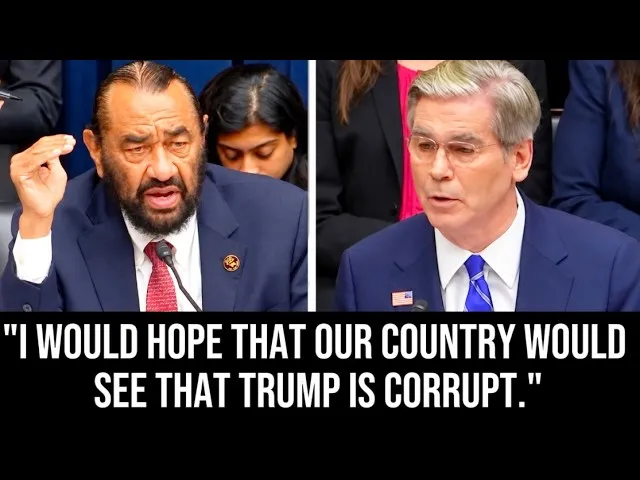
Video: WHOA: Al Green GRILLS Bessent over Trump's meme coin “scam”
Want articles like this for your own video to promote it on YouTube and Google? Order them through the Telegram bot @sat_sit_bot. Articles with your video embedded are written and posted by the bot itself — on popular topical sites (no ads). Free trial — 50 articles.
A meme coin is a cryptocurrency with no product, cash flow or asset backing whose price depends almost entirely on attention and the willingness of new buyers to pay more than the last ones. The renewed scrutiny of Trump's meme coin, including Senator Al Green's questioning of Treasury Secretary Scott Bessent, is the clearest recent example of why regulators and lawmakers keep returning to that definition.
What Al Green asked Scott Bessent about the meme coin
At the hearing, Senator Al Green pressed Treasury Secretary Scott Bessent on whether a sitting president should be able to profit from a token that ordinary buyers purchase at speculative prices. Green's framing was blunt: he described the arrangement as a scam and asked Bessent to address it directly rather than defer to market forces. Bessent's responses stayed inside the administration's usual line, that crypto activity falls under existing agencies and that buyers accept risk. The exchange matters because it puts a Treasury secretary on record about a financial product tied to the president's own name, which is exactly the conflict-of-interest question that has followed meme coins since they became a retail phenomenon.
Why meme coins get called Ponzi and pyramid schemes
The label is imprecise but not random. A Ponzi scheme pays earlier investors with money from later ones while claiming a real source of returns; a pyramid scheme pays participants mainly for recruiting others. Meme coins do neither in a literal, organized sense, but the economics rhyme: the only way an early holder makes money is if a later buyer pays more, and there is no underlying business to generate that money independently. That is why critics in the hearing and in the comment threads reach for the same vocabulary. The difference that matters legally is intent and structure, which is why prosecutors pursue fraud cases on specific misrepresentations rather than on the token design alone.
The mechanics retail buyers keep missing
Most meme coin losses come from a handful of structural features that are visible before anyone buys.
- Concentrated supply. A small number of wallets often holds a large share of the token, so a single seller can move the price.
- Liquidity that can vanish. Thin pools mean exit slippage is brutal; a position that looks like $10,000 can clear for far less.
- No claim on anything. Holders own a token, not equity, revenue or a legal promise.
- Attention as the only driver. Once the news cycle moves on, there is no earnings report to bring buyers back.
- Fees on every trade. Platforms and creators earn whether the price rises or falls.
Typical questions buyers and skeptics raise
The recurring doubts around this story fall into a few recognizable buckets. One is motive: why would anyone buy a token with no fundamentals? The honest answer is access, entertainment, tribal signaling and, in some cases, the belief that a famous name guarantees a floor. Another is legality: is a meme coin itself illegal? Generally no, but promoting it with false claims, selling unregistered securities, or using it to move illicit money are separate offenses that existing law already covers. A third is fairness: should public officials be able to launch or endorse a speculative asset while setting policy toward it? That is an ethics question more than a securities-law question, and it is the one Green kept returning to. A fourth is comparison: how is this different from buying lottery tickets or trading collectibles? The difference is the marketing, the 24/7 market and the ease of access on a phone.
What the hearing changed and what it did not
Nothing about the token's price mechanics changed after the questioning, and no new rule came out of the exchange itself. What changed is the record: a senator publicly characterized the arrangement as a scam in a hearing with the Treasury secretary, which raises the cost of ignoring the issue in future oversight. For traders, the practical takeaway is that political attention is now a factor in meme coin risk alongside liquidity and supply concentration. For regulators, the exchange sharpened the question of which agency, if any, has clear authority over tokens launched by public figures.
How to evaluate a meme coin before buying
Start with the on-chain data rather than the narrative. Check the share of supply held by the top wallets, the size and lock status of the liquidity pool, the age of the contract and whether mint or freeze functions remain active. Then check the distribution of trading fees and who collects them. Finally, ask what would have to be true for the price to rise without new buyers, because for most meme coins the answer is nothing. Treat any pitch that leans on a famous name as a warning, not a guarantee, and size positions as money you can lose entirely.
Summary
The Al Green and Scott Bessent exchange turned a speculative token into a public accountability question about profit, disclosure and who carries the loss. Meme coins are not automatically fraud, but their structure concentrates gains with early holders and insiders while retail buyers absorb the downside. The hearing did not produce new rules, yet it put the conflict of interest on the record in a way that will shape future oversight. Daniel Reed's breakdown of the exchange is a useful starting point for understanding how the political and market sides of this story connect.
Key takeaways
- Senator Al Green publicly questioned Treasury Secretary Scott Bessent about Trump's meme coin, framing it as a potential scam.
- The hearing exchange, covered by Daniel Reed, centered on who profited and who absorbed losses on the token.
- Critics compare meme coins to Ponzi and pyramid schemes because early holders profit only from later buyers.
- Meme coins have no cash flow, no claim on assets and no built-in regulation, unlike securities or commodities.
- Viewer debate split between calls for a formal probe and arguments that buyers should have known the risk.
Questions & answers
Is a meme coin the same as a Ponzi scheme?
Not legally. A Ponzi scheme is an organized fraud that pays old investors with new money while claiming a real source of returns. Meme coins have no such promise, but their economics still depend on later buyers paying more than earlier ones, which is why critics use the comparison.
Can a US president legally launch a meme coin?
There is no specific statute banning a public figure from issuing a token. The legal exposure comes from how it is sold and promoted: unregistered securities offerings, false statements and money laundering are already covered by existing law, and ethics rules for officials are separate from securities law.
Why do people keep buying tokens with no fundamentals?
Buyers are often paying for attention, entertainment, community membership or the belief that a famous name creates a price floor. Easy mobile access and round-the-clock markets make impulsive purchases simple, and early gains posted online pull in the next wave.
What should I check before buying a meme coin?
Look at how much supply the top wallets hold, the size and lock status of the liquidity pool, whether the contract can mint new tokens or freeze trading, and who collects the trading fees. If the price can only rise with new buyers and a famous name is the main selling point, treat it as high-risk gambling money.
Source: WHOA: Al Green GRILLS Bessent over Trump's meme coin “scam” · Markdown version