Robinhood CEO Signals Deeper Ethereum Push
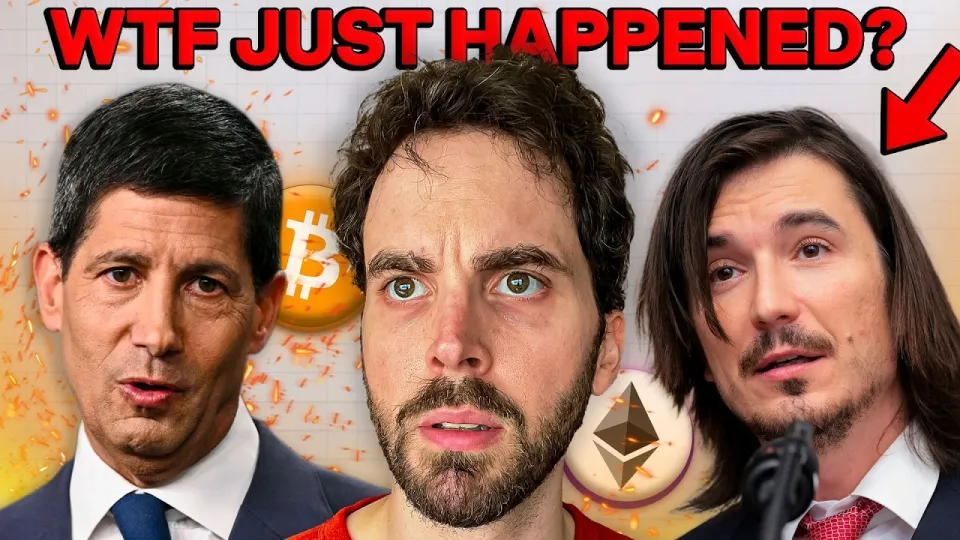
Video: Uh Oh, Robinhood CEO just said this about ethereum
Want articles like this for your own video to promote it on YouTube and Google? Order them through the Telegram bot @sat_sit_bot. Articles with your video embedded are written and posted by the bot itself — on popular topical sites (no ads). Free trial — 50 articles.
Robinhood CEO Vlad Tenev has signalled that the brokerage intends to deepen its involvement in the developer ecosystem and the global onchain community, a statement the market has read as a stronger commitment to Ethereum and the broader crypto stack. The remark landed during a week when the Fed held rates steady, Bitcoin edged higher, and Anthropic's reported mid-November IPO put AI-adjacent crypto assets back in focus. For traders, the practical question is less about a single quote than about what a mainstream brokerage building on Ethereum means for liquidity, token demand and the competitive map of onchain finance. New users who want to act on the news can claim the $25 deposit bonus and 10% trading fee reduction offered through the channel's partner link.
What the Robinhood CEO actually said
Tenev's language was about the developer ecosystem and the global onchain community, not a direct endorsement of any single token — and that distinction matters for how the headline should be read. Robinhood has spent years moving from a pure stock-trading app into crypto custody, wallets and tokenised assets, and executives have repeatedly framed Ethereum as the settlement layer where most real-world asset experimentation happens. When a US-listed broker says its involvement in the onchain developer ecosystem will ramp up, the plausible implications are concrete:
- More engineering resources pointed at Ethereum-compatible infrastructure, including layer-2 networks.
- More listings and custody support for tokens that live on Ethereum and its rollups.
- Greater institutional comfort with onchain settlement, which historically precedes deeper liquidity.
- A louder voice in US regulatory debates about staking, token classification and wallet rules.
None of that is a price guarantee. It is, however, a signal about where a mainstream, regulated intermediary expects its crypto customers to end up — and that is why the comment moved discussion rather than just headlines.
Fed holds rates as Bitcoin grinds higher
The Federal Reserve left interest rates unchanged, and Bitcoin traded slightly higher after the decision rather than selling off. Crypto has been unusually sensitive to rate expectations because tighter policy raises the opportunity cost of holding non-yielding assets, so a hold with no hawkish surprise reads as mildly supportive. Traders watching the macro calendar should keep three things on the dashboard: the next inflation print, the language around the balance sheet, and the reaction in real yields. A steady Fed removes one source of downside pressure but does not create a catalyst on its own — which is why the session's move was modest rather than a breakout. The more interesting detail is resilience: holding a bid into a neutral macro event suggests positioning is not excessively levered to the downside.
Anthropic IPO timing and the AI crypto trade
Anthropic's IPO is reported to be coming in mid-November, and that date matters for crypto because AI tokens have traded as a high-beta proxy for the sector's narrative. A blockbuster listing would give public-market investors a direct way to own AI exposure, which cuts two ways: it validates the theme and pulls speculative capital toward a regulated equity, or it reignites appetite for adjacent tokens such as decentralised compute and data networks. Historically, large tech listings have coincided with local tops in the related crypto narrative as attention rotates, so treat the event as a volatility window rather than a one-directional signal. Position sizing, not conviction, is the variable that decides whether that window helps or hurts a portfolio.
Google's new crypto security system
Google unveiled a new crypto security system aimed at onchain threats, extending the company's push into wallet and transaction safety tooling. For retail users the practical takeaway is that phishing, malicious token approvals and address-poisoning scams remain the most common ways funds disappear, and infrastructure-level detection is more useful than post-hoc warnings. Basic hygiene still does the heavy lifting:
- Revoke unused token approvals on a regular schedule.
- Verify contract addresses from a second source before signing.
- Keep long-term holdings in a hardware wallet rather than a hot wallet.
- Treat unsolicited tokens and airdrops as bait until proven otherwise.
Security headlines rarely move price, but they shape how comfortable mainstream users are with self-custody — and that comfort is a slow input into adoption.
Strategy's daily dividend and the sceptics' case
Michael Saylor's Strategy approved daily dividends, a structural change to how the company returns capital and one that sharpens an existing debate. Supporters see it as financial engineering that extends the company's ability to keep accumulating Bitcoin; critics compare the structure to unsustainable yield schemes and point to the gap between the equity's valuation and the underlying coins. Both readings contain a real point. A daily distribution schedule improves predictability for holders and can broaden the investor base, but it also raises the bar for cash-flow management if the Bitcoin price stays flat for an extended period. The honest framing is that this is a leveraged Bitcoin vehicle with a corporate finance layer on top — not a savings account, and not a substitute for owning the asset directly.
Common questions traders are asking
Three recurring doubts deserve direct answers. First, whether Tenev's comment was really about Ethereum: the phrasing centred on the developer ecosystem and onchain community, so the Ethereum read is an interpretation rather than a quote, and the market is trading the implication. Second, whether a November rally is coming after the midterms or a leg down: nobody knows, and the honest approach is to define invalidation levels before entering rather than after. Third, whether the Robinhood news is bearish for competing onchain venues: a larger regulated entrant usually expands the pie before it takes share, but it does compress fees across the market over time. Treat all three as risk-management questions, not prediction contests.
Links from the breakdown
- Liquid registration with the $25 deposit bonus and 10% fee reduction
- Altcoin Daily on X
- Liquid on X
- WEEX AI Wars hackathon with a $600K prize pool
- Bitunix registration with the bonus offer
Bottom line
The Robinhood CEO's comment is best read as confirmation that mainstream brokers are building toward an Ethereum-centric onchain future, not as a price prediction. Combine that with a Fed on hold, a Bitcoin bid that survived the decision, an Anthropic IPO on the calendar and Google tightening onchain security, and the picture is a market digesting positive structural news without a clear short-term catalyst. That argues for patience and disciplined sizing over chasing headlines. For the full breakdown of these stories, the video analysis comes from Altcoin Daily, and readers who want to trade the themes discussed can activate the partner bonus through Liquid.
Key takeaways
- Robinhood CEO Vlad Tenev says the company's involvement in the developer ecosystem and global onchain community will ramp up, read by the market as a deeper Ethereum commitment.
- The Fed left rates unchanged, and Bitcoin traded modestly higher after the decision.
- Anthropic's IPO is reported as coming in mid-November, a potential sentiment catalyst for AI-linked crypto tokens.
- Google unveiled a new crypto security system aimed at onchain threats.
- Michael Saylor's Strategy approved daily dividends, a shift from its usual accumulation narrative.
Questions & answers
Did the Robinhood CEO actually say the company is betting on Ethereum?
Not in those words. Vlad Tenev referred to ramping up involvement in the developer ecosystem and the global onchain community, which the market interpreted as a deeper Ethereum commitment because most of that activity settles on Ethereum and its layer-2 networks. Treat the Ethereum framing as an interpretation of the statement rather than a direct quote.
Is the Fed holding rates bullish for Bitcoin?
A hold removes one source of downside pressure rather than creating a catalyst, which is why Bitcoin's move was modest. Crypto remains sensitive to real yields and the next inflation print, so the decision is best read as neutral-to-mildly supportive rather than a green light for a breakout.
Could the Anthropic IPO hurt AI-related crypto tokens?
It can cut both ways. A successful listing validates the AI theme but also gives investors a regulated equity to own instead of speculative tokens, and large tech listings have historically coincided with local tops in adjacent crypto narratives. Treat mid-November as a volatility window and size positions accordingly.
What should small holders take from Strategy's daily dividend news?
It is a corporate finance structure layered on top of a leveraged Bitcoin position, not a yield product comparable to a savings account. Daily distributions improve predictability for shareholders but raise cash-flow questions if Bitcoin trades flat for a long stretch, so owning the asset directly remains a different risk profile.
Source: Uh Oh, Robinhood CEO just said this about ethereum · Markdown version